The Hungry Generation
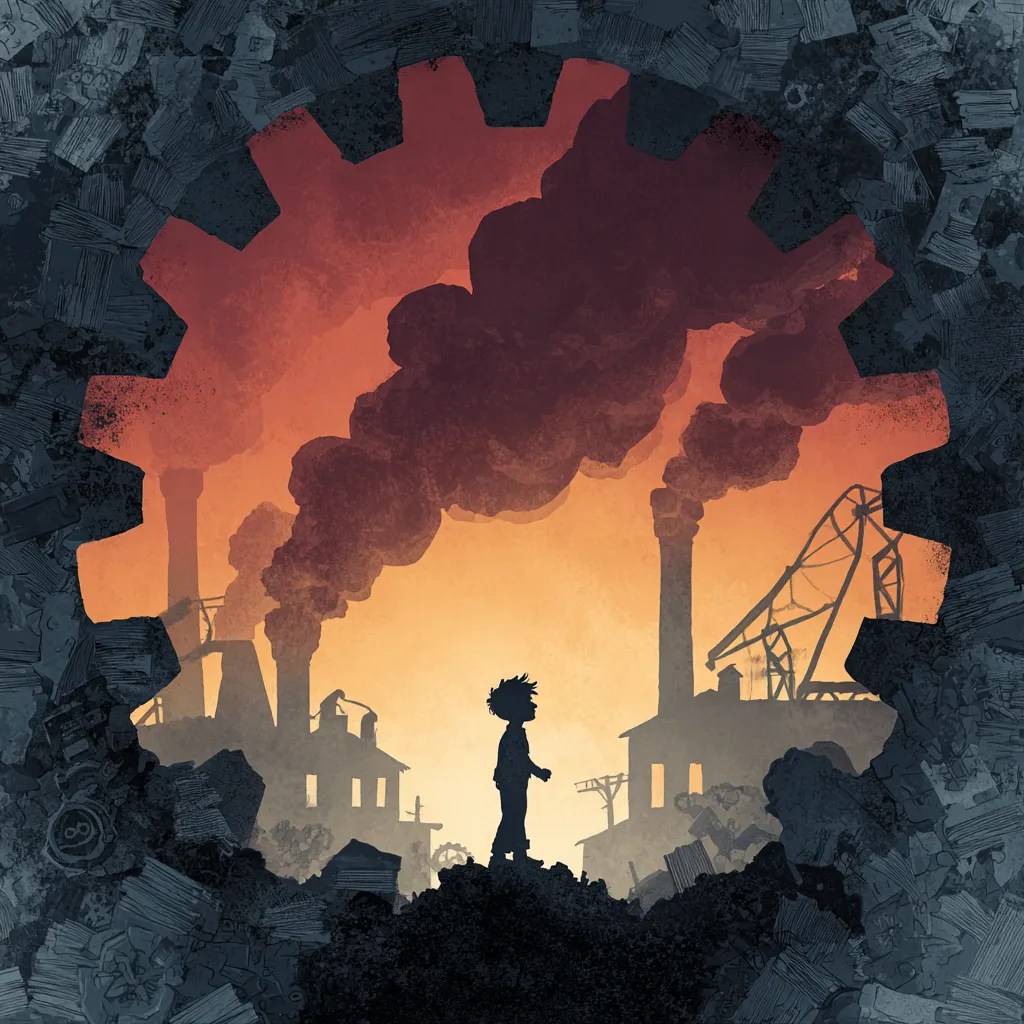
The car hummed softly as it glided down the empty highway, the night thick with an unsettling stillness. The world seemed asleep - buildings dark, roads deserted - but a faint orange glow lingered in the distance. Rows of factories stood solemn and silent, their chimneys releasing thin trails of smoke into the cold air.
But not everything rested.
As I drove past the factories, the headlights caught glimpses of tiny figures moving in the shadows. Children, no older than ten or twelve, toiled away in the dim glow of weak bulbs. Their hands worked swiftly, weaving, stitching, hammering - silent as the night around them. They didn’t cry or complain; they simply worked, their bodies too small for the tasks their lives demanded.
I slowed the car and parked on the side of the road, overwhelmed by the scene. A little boy, barefoot and shivering, pushed a cart stacked with bundles. His movements were mechanical, devoid of childhood energy or hope. A girl, her hair tied back hastily, squatted by a machine, her fingers deftly tying knots in thread after thread.
They didn’t notice me, or perhaps they did and chose to ignore the car, the person inside it – a part of a world they could never belong to.he thought weighed heavy on my chest. I had spent years learning, debating, and dreaming - privileges I had never questioned. I had read about justice and rights, about Gandhiji’s vision of a self-sufficient society and Dr. Ambedkar’s constitution that promised equality. Yet here, in the shadows of progress, those ideas felt like hollow promises.
These children had no choice. Education wasn’t a question for them; it was a distant dream, like the stars above. Their world was raw and brutal, stripped of ideals and debates. They worked to live, to eat another meal, to exist in a society that neither saw them nor cared for them.
And what had I done? Sat in air-conditioned classrooms, argued over Left and Right politics, pontificated on privilege – all the while reaping the benefits of their unseen labor. The phone in my pocket, the clothes I wore, the food I ate all carried the invisible stains of their sweat.
The night seemed darker now. I turned off the car lights and sat in the silence, watching the smoke curl upwards. It was the only thing awake, apart from these children, who carried the weight of an indifferent world on their fragile shoulders.
For the first time, I felt truly selfish - not because I had what they didn’t, but because I hadn’t thought about them enough. Their hunger, their struggle, wasn’t abstract. It was real, raw, and relentless.
They didn’t belong to my world of debates and ideals, but without them, that world wouldn’t exist. Our society was built on their hunger, their sweat, their stolen futures. And I had failed them, just like the rest of civilization had.
As I drove away, their faces stayed with me, etched into the night like scars on a sleeping world. The silence was deafening, filled with their untold stories, and I wondered if I could ever forget.